

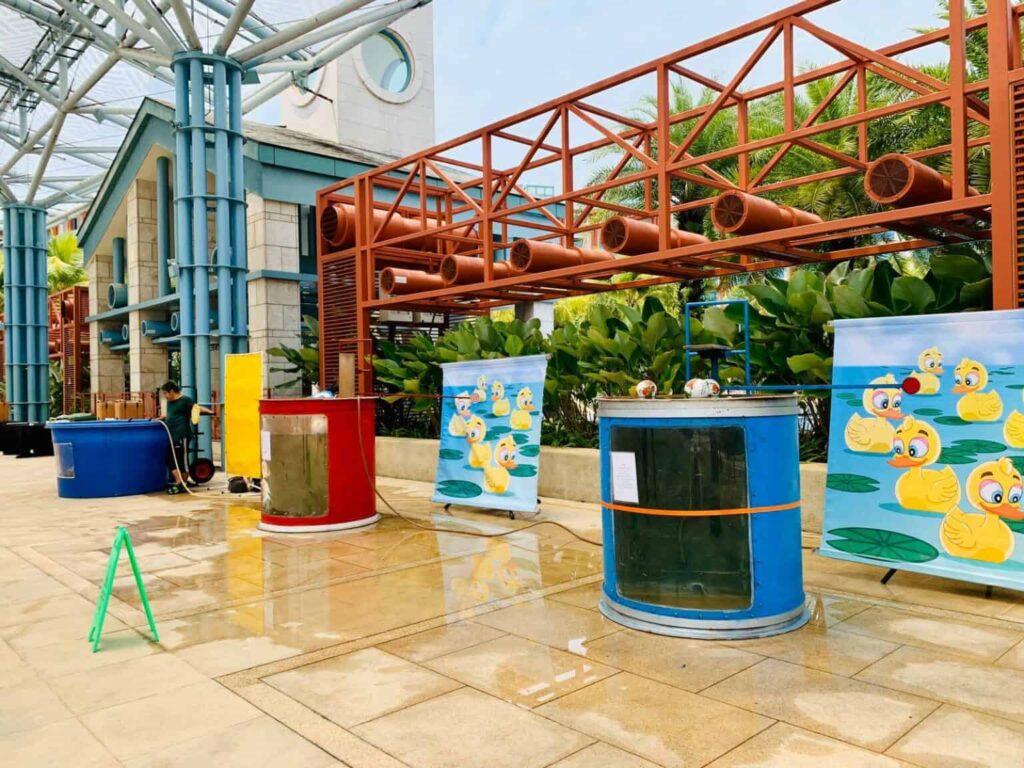
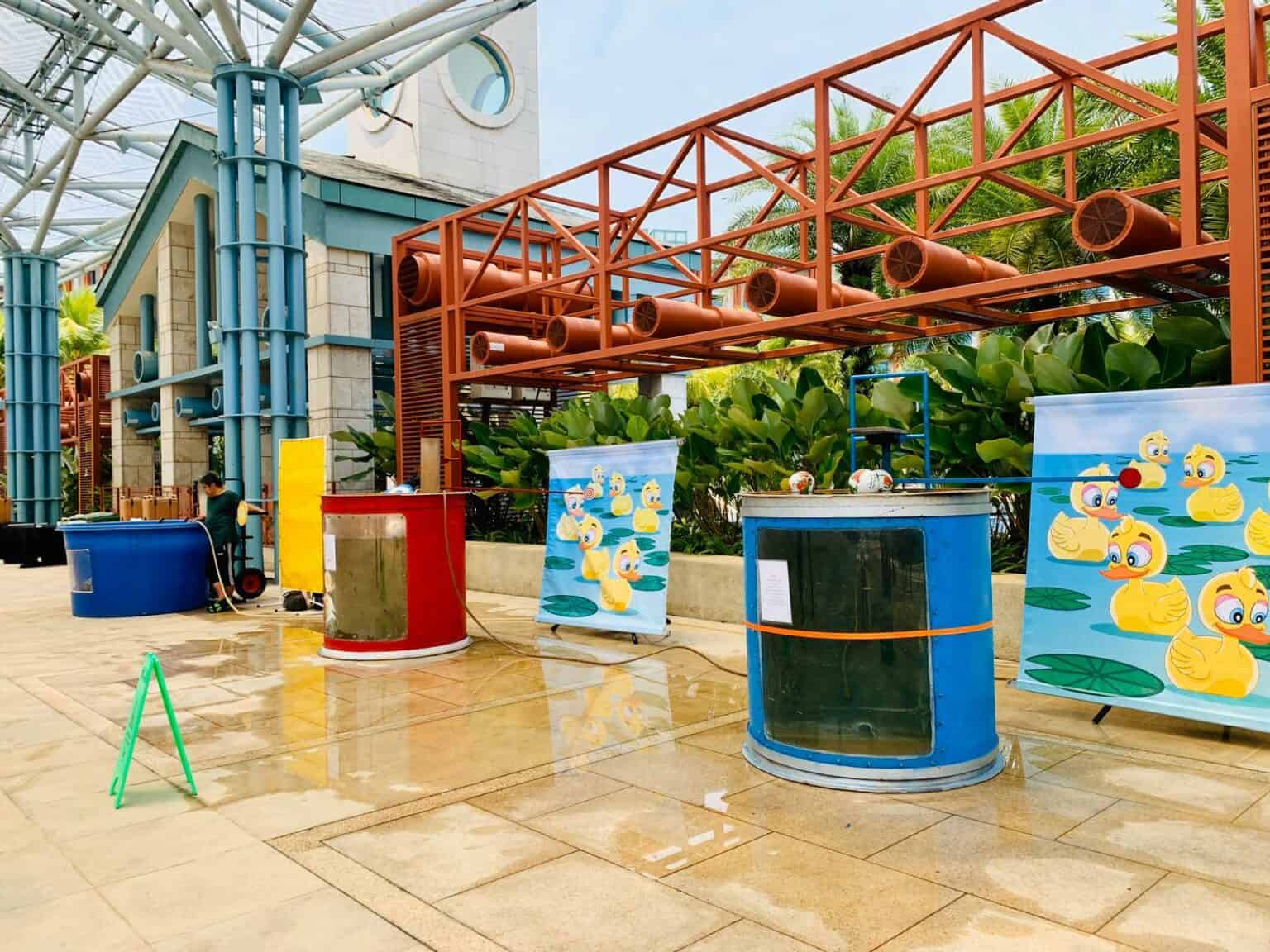
Executing our commercial dunking tank waterpoint drainage SOP turns “Boss-in-the-Tank” charity fundraisers, university orientation camps, and outdoor corporate family days in Singapore into crowd-cheering spectacles. Because a filled dunk tank holds approximately 1,500 liters (1.5 metric tonnes) of water, planning **dunk tank water supply logistics** and **outdoor event water drainage** before delivery day is critical. Dispatched directly from our 5,000+ sqft central Singapore warehouse, our self-owned acrylic-window Dunking Tank is engineered for 100% mechanical, zero-electricity safety.
1. Commercial Dunking Tank Waterpoint Drainage SOP: Technical Matrix
Use this engineering table from our commercial dunking tank waterpoint drainage SOP to confirm site readiness with your venue facilities team:
| Technical Parameter | Mandatory Site Specification | Operational & Safety Reason |
|---|---|---|
| 1. Tank Dimensions & Lane | 1.34m (W) × 1.0m (H) Tank Base + 3.0m–4.0m Throwing Lane | Provides clear front acrylic window sightlines and safe side ball-catch clearance. |
| 2. Water Supply Distance | 1x Venue Water Tap <50m away (Standard hose bibb) | Our crew supplies up to 50m of heavy-duty water hose to fill the ~1,500L chamber. |
| 3. Setup & Fill Lead Time | 4 Hours prior to event start (Assembly + Hose Fill) | Standard domestic/park tap pressure requires 90–150 minutes to fill 1,500 liters. |
| 4. Electrical Power Draw | 100% 0W Zero Electricity (Mechanical target trigger) | Zero electrical cords in the wet splash zone ensures complete participant safety. |
| 5. Post-Event Drainage | Adjacent storm drain gully or open turf absorption zone | A filled 1,500kg tank cannot be lifted until drained via the bottom release valve. |
2. Structural Load-Bearing, Rider Safety Rules & Target Calibration
During live operation under our commercial dunking tank waterpoint drainage SOP, three participant safety rules must be enforced:
1. Seated Hands-On-Knees Posture
The person sitting on the collapsible bench must remain seated upright with hands resting on their knees (never gripping the metal seat edges or standing on the bench) so they drop cleanly into the center of the water basin.
2. Safety Latch Engagement During Climb
Engage the mechanical safety pin whenever a participant is climbing up the side steps or resetting the hinged seat, removing the pin only after the sitter is centered and ready.
3. Soft Throwing Balls Only
Only use the supplied lightweight foam/rubber target balls thrown from behind the 3.0m–4.0m foul line—never allow hard baseballs or heavy objects near the tank.
3. Dry-Hire Committee Handover vs. Uniformed Game Master Pacing
Every deployment following our commercial dunking tank waterpoint drainage SOP includes full setup, hose connection, and post-event drainage:
| Operational Phase | Equipment Dry-Hire Protocol (Client PIC Handover) | SOP-Briefed Game Master Protocol ($30/hr per pax) |
|---|---|---|
| 1. 4-Hr Pre-Event Rigging & Fill | Our briefed setup crew arrives 4 hours early, assembles the tank, connects the <50m hose to your water point, tests the target latch, and briefs your PIC. | Our briefed setup crew completes assembly and water filling, handing the splash zone directly to our uniformed on-site Game Master before start time. |
| 2. Active Dunking & Drainage | Volunteer marshals lock the safety pin during seat resets and retrieve thrown balls; our teardown crew opens the drain valve at event close. | Uniformed Game Master ($30/hr per pax, min. 2 hrs) operates the safety latch, resets the seat after each dunk (60–80 throwers/hr), and manages drainage. |
References
- PUB, Singapore’s National Water Agency. (2026). Water Supply & Surface Water Drainage Guidelines for Temporary Events.
- Workplace Safety and Health Council (WSHC). (2026). bizSAFE Level 3 Event Risk Assessment Standards.